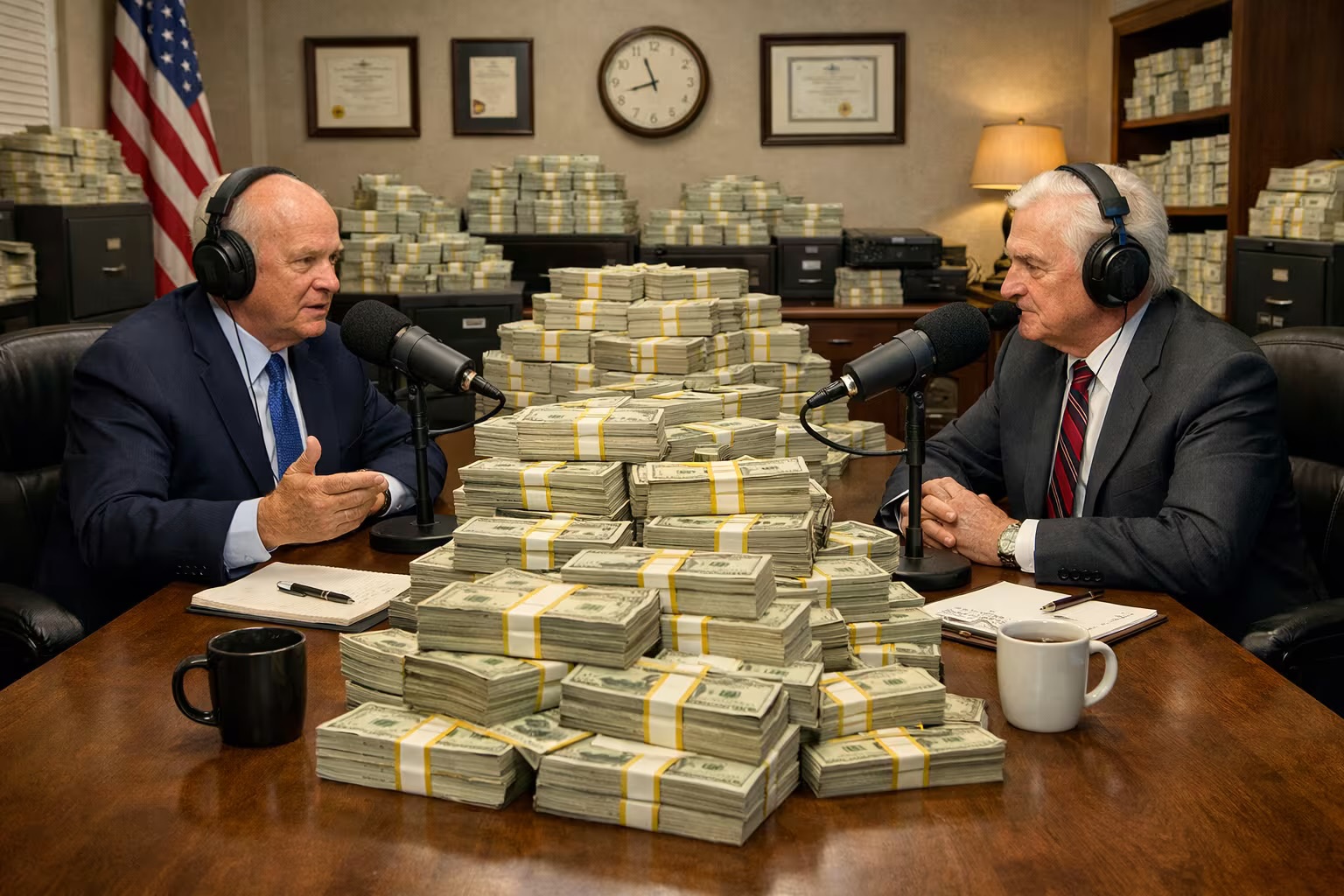
It’s sorta funny to find myself titling a blog post this. Around 20 years ago, I read Paul Krugman’s book, Peddling Prosperity, which essentially means the same thing. However, that book was about the US Congress enticing voters with promises of a better future (hmmm this sounds familiar), whereas I seek to describe a cultural phenomenon.
As is often the case, I just read an email. It was doubtlessly sent out as part of a marketing gambit. In this email, the sender described a podcast circa 2005, and he made the claim that if you simply started then, you’d be rich and famous or whatever now. The problem, of course, is that along the way, you’d get advice like, “stop doing the things that don’t benefit you.” I had a podcast circa 2011, and I don’t even think we called it a podcast. We — I think — were still calling it an “online radio show.” Things online became far more mainstream circa Covid, but it was essentially impossible to predict that years in advance.
As is commonly the case, sellers target known cognitive biases as an attempt to get more sales. In my opinion, that is shameful, and I wish they’d find a more constructive strategy. If you get ahead by putting everyone else behind, is that really winning?
To borrow a line from DJ Khaled: “You played yourself.”
Back to podcasting in 2005 specifically. Do you think the line on the graph is “up and to the right” the whole time? I promise some folks were immensely successful in 2007, then in 2008, their numbers were down, and in 2009 they quit. Not to mention, talking repeatedly across twenty years is grueling. Like, why talk just to talk? If you don’t have something specific to say, 🤫. If I may borrow a line from Depeche Mode, “Enjoy the silence.”
I actually think sales is an extremely important role — and not just because I read [part of] Daniel Pink’s book, _To Sell is Human_. I think sales is extremely important to the current economy, as well as to the future of civilization. Yet, I think a lot of people in sales roles neglect to appreciate the significance of what they’re doing, leading us to an economy of charlatans who seem to think deception is essentially selling.